LSAT Flaw Practice Questions: Prephrase the Bad Move
Drill LSAT flaw questions by finding the conclusion, support, and bad move before abstract answer choices rename the argument.
Read it to name the pattern, then practice while it is still fresh.
Prepared by Askiras editorial team. These guides stay short on purpose: one pattern, one worked example, one clear next step into practice. How we build guides.
Uses public LSAT question-type strategy context; does not reproduce protected LSAC questions.
LSAC LSAT context, Askiras independence, and no unsupported outcome claims.
How should I practice LSAT flaw questions?
Practice LSAT flaw questions by forcing a prephrase before looking at answer choices: conclusion, support, bad move. Then review wrong answers by naming whether you missed the conclusion, overstated the flaw, or let abstract language rename the argument.
The short answer
Flaw practice is not just “do more flaw questions.”
The drill should force the habit:
- Find the conclusion.
- Find the support.
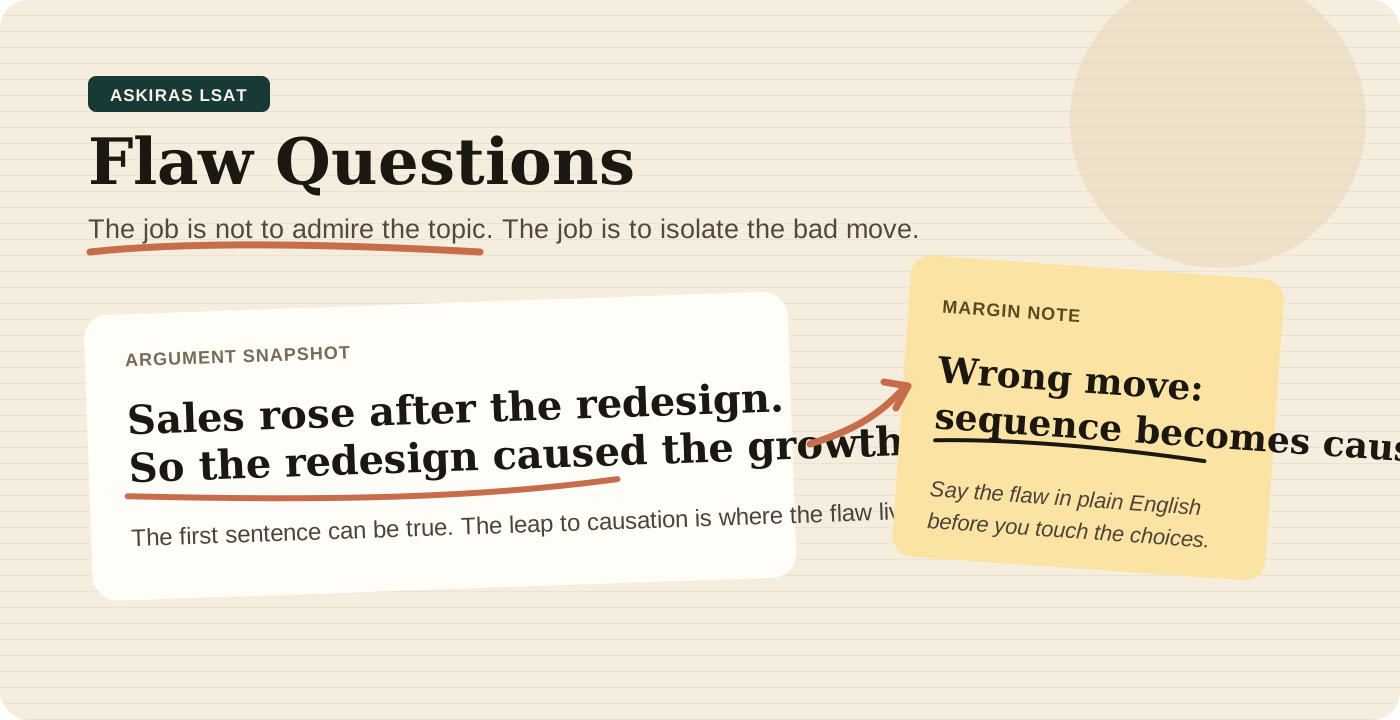
- Say the bad move in blunt language.
- Only then read the answer choices.
If you skip step 3, the abstract answer choices do too much thinking for you.
A flaw-drill routine
Use a five-question set.
For each question, write one sentence before looking at answers:
“The author concludes ___ because ___, but the argument assumes/ignores/confuses ___.”
That sentence is your prephrase.
It does not need to sound like an LSAT answer choice. It needs to be accurate.
Review the miss by cause
When you miss a flaw question, label the failure:
- wrong conclusion
- support not separated from conclusion
- flaw too broad
- flaw too narrow
- answer choice introduced a different criticism
- abstract wording sounded familiar but did not match
That label tells you what to fix in the next drill.
Common flaw patterns to notice
Many flaw questions reuse a small set of reasoning moves:
- treating correlation as proof of cause
- assuming one example proves a general rule
- attacking a person instead of the reasoning
- confusing necessary and sufficient conditions
- comparing groups without checking whether they are comparable
- assuming no evidence means evidence of absence
Do not memorize these as a list first. Use them to sharpen the bad move after you read the argument.
Bottom line
The best LSAT flaw practice makes you commit before the answer choices.
If you can name the bad move in plain English, the formal answer choice becomes easier to recognize.
Frequently asked questions
Should I drill flaw questions by fallacy name?
Start with plain-English bad moves. Formal labels can help later, but the credited answer rewards accurate reasoning, not vocabulary.
How many flaw questions should I do in one drill?
Use small sets if you are still building the pattern. Five deeply reviewed questions can teach more than twenty rushed questions.
What is the most common flaw-drill mistake?
Reading answer choices before you have named the bad move. That lets the test rename the argument for you.
Keep going in this exam
Other guides at Askiras
If you are also prepping another exam, these short guides cover the same "name the pattern, then practice" habit.